The Best Books for Teens: Self-Help Books Worth Their Time
A short list of practical, readable self-help books for teens, with honest notes on who each one fits. Our own book is first, and we say so plainly.
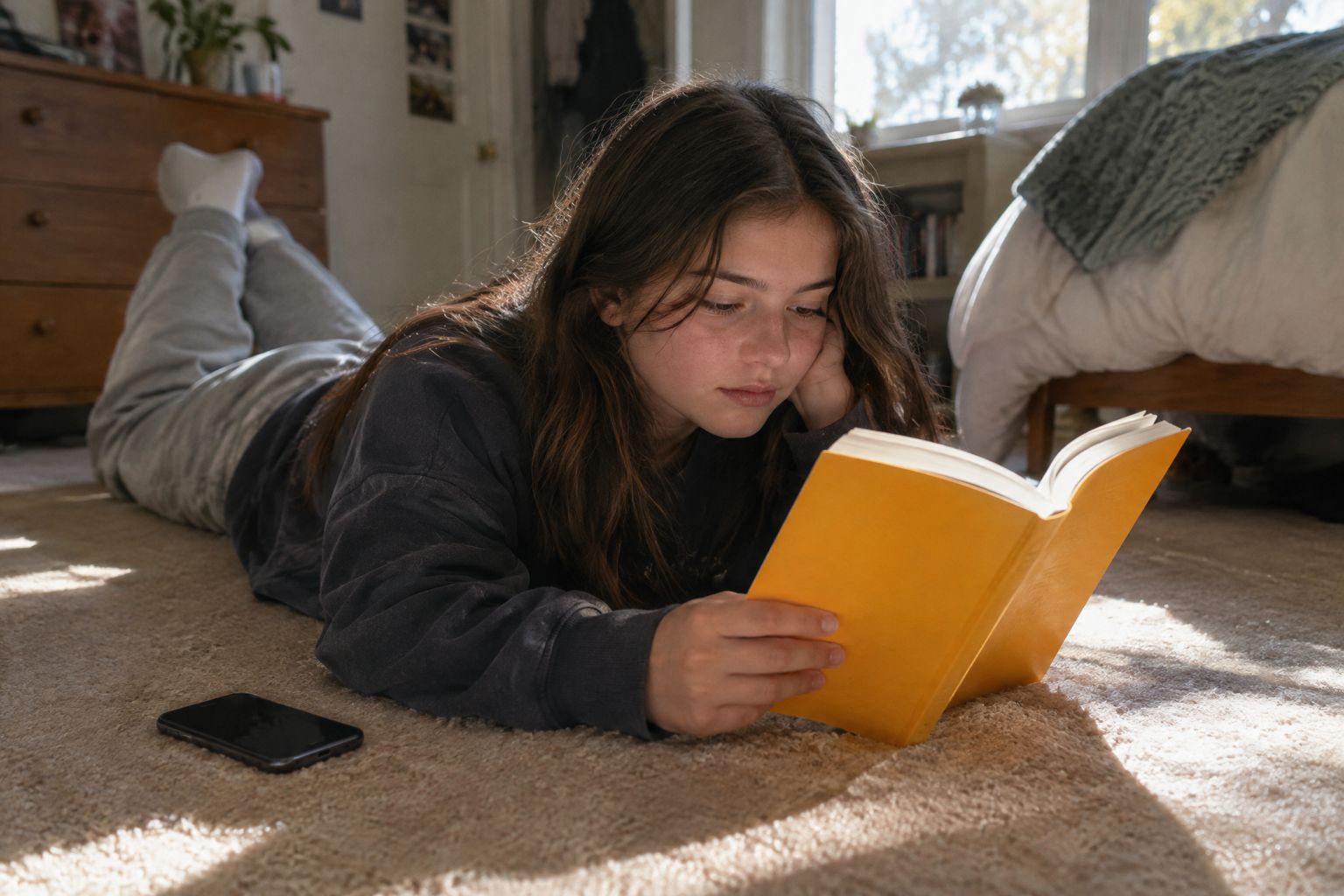
Most teens do not want a lecture. They want straight answers about the things in front of them: friends, school, money, a first job, and figuring out who they are. A good book for a teen gives those answers in plain words and then gets out of the way.
That is the test we used for this list. Every book here is practical, easy to read in short bursts, and respectful of the reader. None of them treat a 15-year-old like a little kid. Several are books a teen can come back to at 20 or 25 and still get something new.
We put our own book first, and we want to be upfront about that. After it, you will find eight other self-help books for teens that we think are worth the shelf space, with a note on who each one suits best.
How we picked these
- Practical. Each book gives the reader something to actually do, not just something to think about.
- Readable. Short chapters, plain language, and examples a teen can relate to.
- Respectful. No preaching and no talking down. The reader is treated as someone who can make good choices.
- Useful for years. These are books that still make sense after graduation, at a first job, or in a first apartment.
1. Jumpstart Your Life (our book)
The people who run this site wrote this one. Jumpstart Your Life is 101 short lessons for teens and young adults, written by cousins Nicholas Gabriel Irmo and Vincent Palizzolo Polyanov. It grew out of what their grandparents taught them while raising seven children. Each lesson is about a page or two, so a teen can read one at breakfast or before bed. The topics cover a lot of ground: friendships, dating, money, health, food, hygiene, work, learning, influence and doing the right thing.
It fits best for a teen who would never sit through a long book but will read something short and direct. It also works well as a book a parent and teen read together, one lesson at a time. If your teen wants a deep dive on one single topic, like habits or money, one of the more focused books below may suit them better.
Start with these lessons:
- Your Time is Your Greatest Gift
- Be the Friend You Wish to Have
- Pay Yourself First
- Failure is a Teacher, Not a Punishment
2. The 7 Habits of Highly Effective Teens by Sean Covey
This is one of the best-known self-help books written just for teens. It walks through seven habits, like being proactive and putting first things first, and explains each one with stories and simple examples. The style is light and visual, with cartoons and quotes breaking up the text. It is a strong pick for a younger teen, around middle school or early high school, who is new to this kind of book.
3. The 6 Most Important Decisions You'll Ever Make by Sean Covey
Also by Sean Covey, this book zeroes in on six big areas where teens make choices that shape their lives: school, friends, parents, dating and sex, addictions, and self-worth. It is a good fit for an older teen facing real decisions in those areas. Parents may want to look it over first, since it speaks openly about dating and peer pressure. Many families will find that is exactly the point.
4. Atomic Habits by James Clear
This book is written for adults, but plenty of teens get a lot out of it. The core idea is that small habits, repeated every day, add up to big results over time. It explains how to make good habits easier and bad habits harder in a clear, step-by-step way. It suits a teen who is motivated to improve something specific, like studying, working out or screen time.
5. Mindset by Carol S. Dweck
Carol Dweck is a psychologist who studies how people think about their own abilities. Her book explains the difference between a "fixed" mindset, the belief that you are either good at something or not, and a "growth" mindset, the belief that you can get better with effort. It reads more like an adult book, so it is best for an older teen or a reader who likes ideas. It can be especially helpful for a teen who gives up quickly after a bad grade or a loss.
6. Grit by Angela Duckworth
Grit is about passion and perseverance: sticking with something hard over a long stretch of time. Angela Duckworth argues that this kind of steady effort often matters as much as natural talent. It is a good book for a teen in sports, music, a tough class, or any goal that takes years. Like Mindset, it is written for adults, so it fits older or more serious readers best.
7. Make Your Bed by William H. McRaven
William H. McRaven is a retired Navy admiral, and this short book grew out of a graduation speech he gave. Each chapter is a simple life lesson tied to a story from his military training and career, starting with the idea that small tasks done well lead to bigger things. It is quick to read and easy to talk about. It is a great choice for a teen who likes stories more than theory.
8. Quiet Power by Susan Cain
This is the teen version of Susan Cain's book Quiet. It is written for introverts: teens who recharge by being alone and who may feel pressure to be louder at school or with friends. The book shows how quiet strengths, like listening and deep focus, are real strengths. It can mean a lot to a shy or reserved teen who has been told they need to "come out of their shell."
9. How to Win Friends and Influence People by Dale Carnegie
This is a classic about getting along with people. Its advice is simple and still holds up: listen, remember names, show real interest in others, and avoid needless arguments. Some of the examples feel old-fashioned, since the book has been around a long time. It is a good pick for an older teen heading into a first job, college interviews, or any setting where people skills matter.
A note for you, the parent: If you want something for yourself, How to Raise an Adult by Julie Lythcott-Haims is written for parents. It looks at how to step back and help kids learn to handle life on their own.
How to choose the right one
Start with your teen, not the list. A few quick questions can point you in the right direction:
- How much do they read now? A reluctant reader will do better with short chapters, like Jumpstart Your Life or Make Your Bed.
- How old are they? Younger teens often connect with The 7 Habits of Highly Effective Teens. Older teens can handle adult books like Atomic Habits, Mindset or Grit.
- What are they dealing with? Big decisions point to The 6 Most Important Decisions You'll Ever Make. Shyness points to Quiet Power. A specific goal points to Atomic Habits.
- What do they enjoy? A teen who likes stories may prefer Make Your Bed. A teen who likes ideas may prefer Mindset.
When in doubt, pick the shorter, simpler book. A book that gets read beats a better book that sits on a shelf.
How to give a book a teen will actually read
- Skip the speech. Hand it over with a short, kind note instead of a talk about why they need it.
- Point to one chapter. Say something like, "I thought of you when I read the part about friends." One small door is easier to walk through than a whole book.
- Read it too. If you read a chapter and bring it up casually in the car or at dinner, it turns into a conversation instead of homework.
- Let them own it. Do not quiz them or check their progress. Let them read at their own pace, or not at all for a while.
- Make it a gift, not a fix. Give it for a birthday, a holiday or a milestone. A book given as a gift feels very different from one given as a correction.
The bottom line
The best books for teens are the ones they actually open. Pick one that fits your teen's age, reading habits and what they are going through right now, hand it over with no pressure, and let it do its quiet work. Even one good idea, picked up at the right time, can stick for years.
Want all 101 lessons in one place? Jumpstart Your Life is short, practical, and written for teens.
Get the bookCommon questions
What is a good self help book for a teenager?
A good self-help book for a teen is short, plain and practical. It should give real steps for school, friends, money and habits without talking down to the reader. Books with short chapters are easier for a busy teen to pick up and put down.
What age are self help books for teens written for?
Most are written for roughly ages 13 to 19, though many work well into the early twenties. Younger teens often do best with books that have short chapters and simple examples, while older teens can handle books written for adults.
How do I get my teenager to read a self help book?
Skip the lecture and keep it low pressure. Give the book with a short note, mention one chapter you think they would like, and let them read it on their own time. Reading a chapter yourself and talking about it can help too.
Are self help books good for teens?
They can be, when the book is honest and practical. A good one gives a teen words and ideas for things they are already dealing with, like stress, friends or money. It works best as one tool alongside real talks with the adults in their life.